Here
Sixty photographic images for saying what suits you now, what gets in the way and what support you need.
Open the deckWhat's in the deck
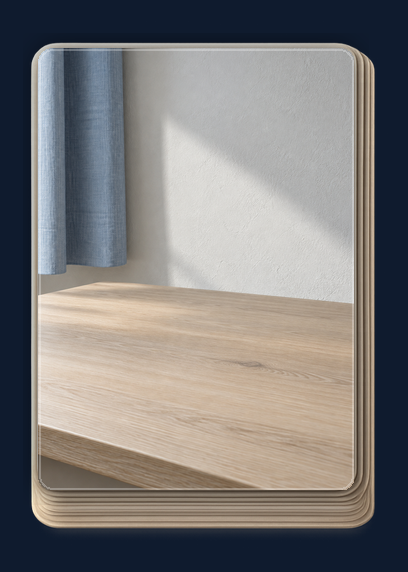
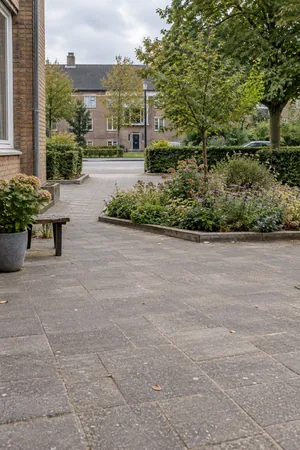
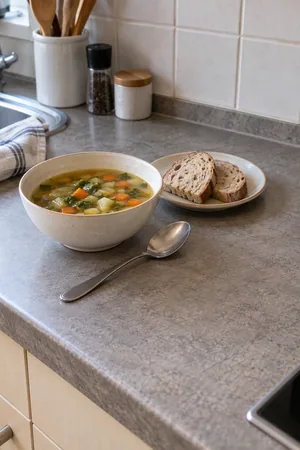
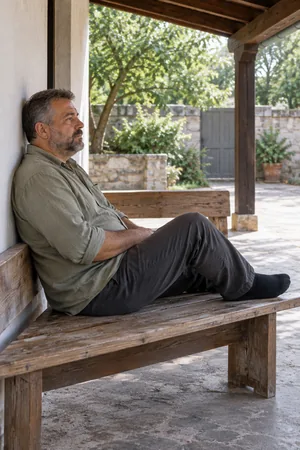
Here works on one question: what fits me right now and what can I choose. The images are photographs of ordinary life, close enough to recognise and open enough to mean different things to different people. Six groups of ten cover attention and orientation, sensations and movement, choice and boundaries, people and practical support, room for feelings, everyday life and next steps. The deck is designed so that nothing has to be explained: you can point at what is difficult, pick the less unpleasant image, ask for more distance, decline what was offered or name a practical need. Any card can be set aside without a reason, and putting the deck away is a valid outcome of a session.

Groups
Attention and Orientation
What you notice around you and where you want to direct your attention. Familiar points of reference, shifting focus, and moments when things are hard to make out.
Sensations and Movement
Sensations, movement and stillness. Which textures and positions suit you, which do not, and when you want to change the pace or pause.
Choice and Boundaries
The right to agree, decline or change your mind. Distance, privacy, the pace of an interaction and deciding how you want to take part.
People and Practical Support
People, practical items and services you may need. Asking for help, choosing its form and discussing barriers.
Room for Feelings
Experiences that are hard to put into words. Mixed feelings and expressing something through an image without explaining your personal story.
Everyday Life and Next Steps
What comes after a conversation or a pause. Food, rest, familiar activities and everyday tasks you can begin or leave for later.
Techniques where this deck fits
These are the self-reflection techniques in our Self-Work Navigator that work well with this deck:
When to pick
Words are not coming
Naming a state is hard, but pointing at an image is possible. The picture becomes the shared object of the conversation.
The question is what helps
People and Practical Support and Everyday Life and Next Steps turn a vague "I need something" into a concrete request.
Distance and pace matter
Choice and Boundaries is about agreeing, declining and changing your mind, which is often the first thing worth rehearsing.
After a hard stretch
Not to relive it, but to see what is available now: rest, food, a familiar task, one small next step.
When this isn't the right deck
Here is designed to be trauma-informed, which is a way of designing and running the work rather than a certification, and the deck itself is not a clinical instrument. Its main use is with a psychologist or therapist trained in working with traumatic experience. On your own it suits everyday stress, needs and the next practical step; it is not for processing trauma alone, not for checking memories and not for help during an acute crisis. An image does not show the state of a nervous system and does not establish PTSD, dissociation or readiness for therapy.
Other decks in MAC Cards Online
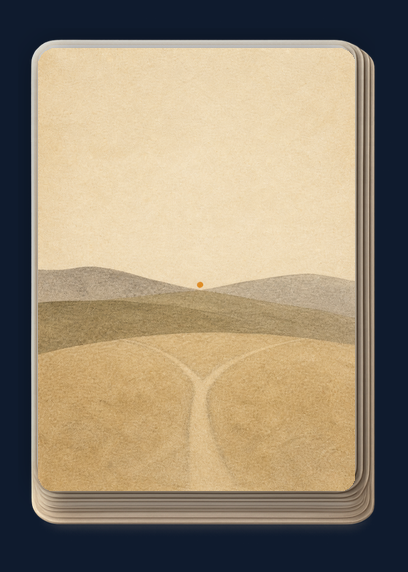
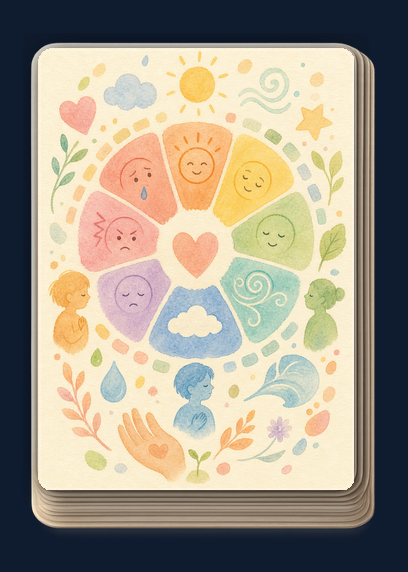
About metaphorical associative cards (MAC)
Metaphorical associative cards (MAC) are a projective tool used in self-reflection, coaching and therapy. Unlike tarot or oracle cards, they don't predict anything – the image becomes a mirror for what is already happening inside you.
You can work with MAC cards alone in a quiet 5-minute session, with a therapist, or in a group. The card is not the answer; it is a frame for asking yourself a more honest question.
On MAC Cards Online, every public deck is free to try in your browser – no installation, no registration. The platform also has Self-Work Navigator with 8 guided techniques that walk you through a session step by step.