
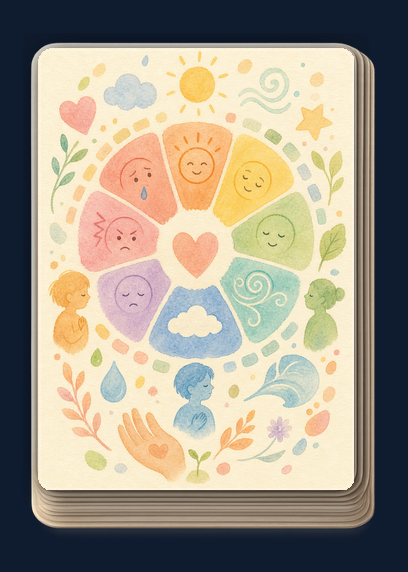
I Feel
Portrait deck for working with children and teens. About emotional literacy, body signals and self-regulation.
Open the deckWhat's in the deck
I Feel is a soft, contemporary picturebook deck for emotional literacy, self-regulation, and conversation about hard states. It is built for ages 6 to 14 first, and it works well with adults who want a gentle entry into inner-child work, parenting reactions, or body check-ins. Each card is a watercolor scene with one or two children in everyday life: a kitchen, a classroom corner, a quiet room, a school step. Seven tracks cover basic emotions, complex feelings, body signals, social signals and boundaries, transitions and mixed states, resources for coming back to oneself, and family / body image / autonomy for early teens. The visual language is trauma-informed: every difficult feeling stays lit, dignified, and survivable. The deck does not diagnose; it gives a child, a parent, or a therapist a vocabulary for what is happening before it becomes anger, withdrawal, or a quiet collapse.




Groups
Basic Emotions
Joy, sadness, fear, anger, surprise, disgust, and other recognisable states.
Complex Feelings
Shame, guilt, loneliness, hurt, jealousy, hope, tenderness. Feelings without easy words.
Body Signals
Shoulders, breath, belly, throat, skin. How emotion shows in the body before words.
Social Signals & Boundaries
Being seen, being included, saying no, being interrupted, unfairness. Feelings in relation to others.
Transitions & Mixed States
Afraid and trying, tears and smile, after the quarrel, first day. When several feelings are true at once.
Resources & Integrators
Breath, an adult nearby, a safe corner, drawing, movement, water, pause, a word. What helps return to oneself.
Family, Body Image & Autonomy
Family misunderstanding, body image, the teenage «I'll do it myself», and asking for help that respects autonomy.
Techniques where this deck fits
These are the self-reflection techniques in our Self-Work Navigator that work well with this deck:
When to pick
Family and school work with children
Helps move from "she is being difficult" to "what is she feeling, where is it in her body, what does she need".
Trauma-informed group work
Tracks Basic Emotions and Body Signals work in small groups without exposing any single child.
Adult sessions about the inner child
The childlike illustrated language lowers defensiveness: it is easier to say "I see this on the card" than "I felt this".
Parents who want to talk about feelings
Resources and Integrators give concrete grounding gestures: a hand on the heart, a long exhale, asking an adult, drawing the feeling.
When this isn't the right deck
I Feel is a vocabulary deck for naming and gentle regulation. It is not a tool for unguided trauma work, active suicidality, self-harm, or family violence. In those cases it can only sit alongside specialised care, not replace it. It is not a behavior-correction card set and not a moralizing poster of "right emotions". If the topic is adult professional life, pick Momentum. If it is a couple, pick Between Us. Not tarot, not an oracle, not a diagnostic test. The card does not say what the feeling means; it gives a child or an adult a frame to recognise that something is happening inside, and that this can be named.
Other decks in MAC Cards Online

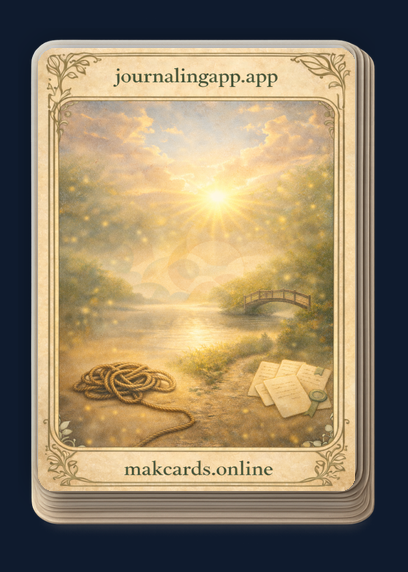
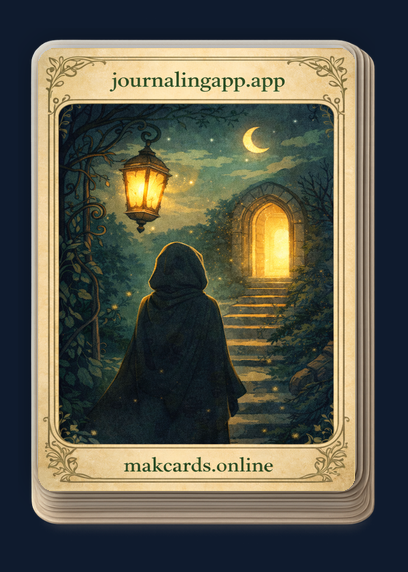
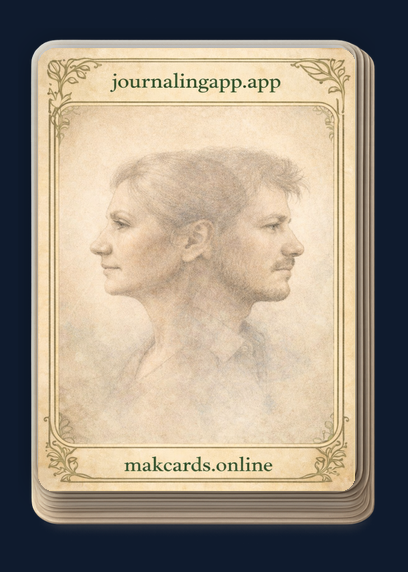



About metaphorical associative cards (MAC)
Metaphorical associative cards (MAC) are a projective tool used in self-reflection, coaching and therapy. Unlike tarot or oracle cards, they don't predict anything – the image becomes a mirror for what is already happening inside you.
You can work with MAC cards alone in a quiet 5-minute session, with a therapist, or in a group. The card is not the answer; it is a frame for asking yourself a more honest question.
On MAC Cards Online, every public deck is free to try in your browser – no installation, no registration. The platform also has Self-Work Navigator with 27 guided techniques that walk you through a session step by step.