From Obstacle to Resource
You have a goal, and "something is in the way". This technique helps you see the obstacle and find a resource for it.
The technique below lives inside Self-Work Navigator on our platform – open it and the steps walk you through automatically.
Open Self-Work NavigatorAbout this technique
From Obstacle to Resource is a 20-minute self-reflection technique with metaphorical associative cards (MAC). You have a goal, and "something is in the way". This technique helps you see the obstacle and find a resource for it. The session is designed to be run on your own, in your browser, without a therapist or a registration step.
It fits when the goal is clear, but movement toward it has stalled. On the platform the steps walk you through automatically inside Self-Work Navigator, so you don't have to remember anything beyond the question you brought. We recommend starting with Crosspoint – it lands well for this kind of work.
Questions this technique helps with
These are the kinds of questions people bring to this technique. If you recognise yours, you are in the right place.
- What blocks me from reaching my goal. Goal + obstacle + resource. Three cards reveal what blocks movement and what can help.
- Creative block self-reflection exercise. When stuck on a project, the spread helps see the obstacle as part of a map, not a wall.
- Stuck on a project what to do. The obstacle card often shows something other than what you thought – already half the answer.
- Obstacle to resource technique MAC. The third card pulls out a resource you already have but didn’t notice in this situation.
- Find inner resource for a goal. Good for career and personal tasks where the “what” is clear but the “how” is stuck.
- Work with an obstacle through cards. Metaphor softens resistance – you talk via an image, not directly about yourself.
When this technique fits
- The goal is clear, but movement toward it has stalled.
- You sense you're missing something, but not sure what.
- You want to end the technique with a concrete next step.
When it doesn't fit
- If the "goal" right now isn't really yours – it was imposed from outside – the technique will show an obstacle where there isn't one. First, clarify what you actually want (for that, "Picture and Word" or "Timeline" work well).
What you need
- 20 minutes without interruptions.
- Pen and paper.
- Any deck. It works well to use one deck for the "obstacle" and another (resourceful) for the "resource" if you can choose; but one deck is fine too.
The layout
3 positions. Each one has its own question, and the card in it answers that question rather than the whole request.
- 1GoalWhat do I actually want?
- 2ObstacleWhat stops me getting near it?
- 3ResourceWhat helps me through the obstacle?
How the session goes
-
1
Phrase the goal in one line
Concrete, in the positive. Not "I don't want to procrastinate anymore", but "Finish the chapter by Friday". Not "I don't want to be so tired", but "A weekend with energy".
Write the goal at the top of your page.
-
2
Draw the goal card (open draw)
For this card you choose by eye. Look at 4–6 cards offered to you and pick the one that most resembles your achieved goal – who you'll become when you reach it.
Place it on the right.
-
3
Describe the goal card
- What do I see here?
- What changes in me when I look at this version of myself?
- What one quality do I find there that I'm missing now?
-
4
Draw 1–2 obstacle cards (blind)
Ask yourself: "What stands between today's me and that goal card?" Draw one card. If you sense the obstacle is complex and layered, you can draw a second – but no more.
Place it between yourself and the goal card.
-
5
Describe the obstacle
Don't rush. This is the most important part of the technique.
Write down 1–2 key phrases.
- What do I see here – what image of the obstacle?
- Is this obstacle inside me (fear, habit, self-doubt) or outside (circumstances, people, resources)?
- What's familiar about it – has something like this come up before?
- If it could speak, what would it say?
-
6
Draw the resource card
Ask: "What resource do I need to pass through this obstacle?" Draw one card blind.
Place it next to the obstacle card – like an "antidote".
-
7
Describe the resource
- What do I see here?
- Is it an inner quality (patience, courage, clarity) or an outer support (a person, a tool, time)?
- Where does this resource already exist in my life?
- How could I call it in to meet the obstacle?
-
8
Tie the three cards into one phrase
"To reach [goal], I need to meet [obstacle] and lean on [resource]." Write it down.
-
9
One small step
Not a plan, not a strategy – one small step you can take today or tomorrow. For example: "Send one message." "Sit with this theme in silence for 10 minutes." "Ask a specific person for help."
Write it down. That's enough.
Closing the session
Three calm breaths in and out. Gather the cards. Leave the page with the phrase and the step somewhere visible until tomorrow. Often the small step takes itself if it's written down.
If a lot came up
The obstacle sometimes turns out to be not "logistics" but an old fear or pain. That's normal, but it means a simple technique gives you a limited view. If a lot rose up and feels familiar – for example, "I always get stuck like this" – talking with a therapist can give you much more than repeating the technique alone.
Recommended decks
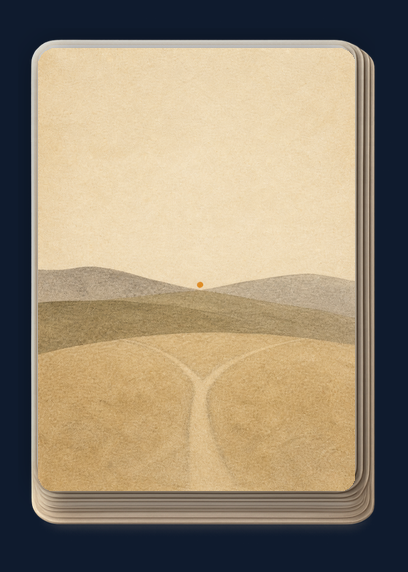
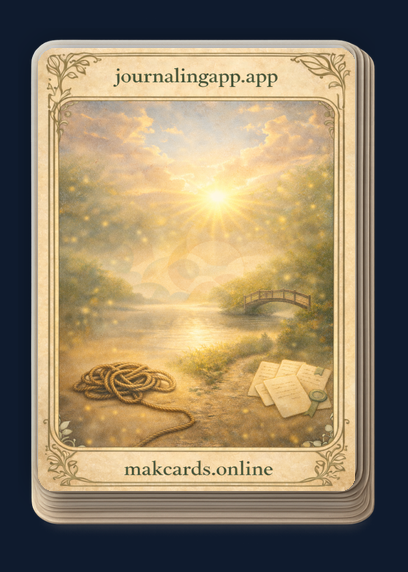
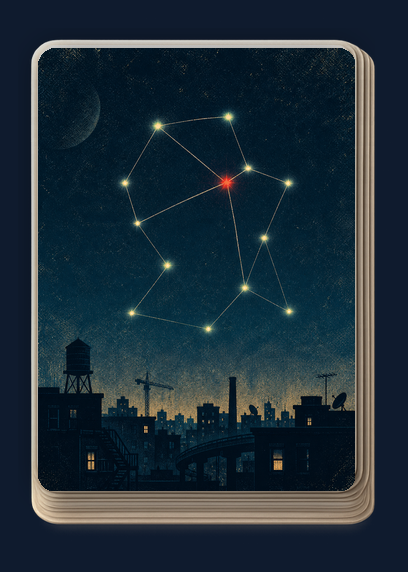
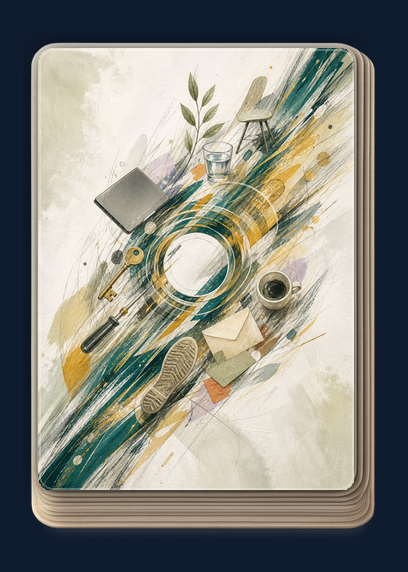
About metaphorical associative cards (MAC)
Metaphorical associative cards (MAC) are a projective tool used in self-reflection, coaching and therapy. Unlike tarot or oracle cards, they don't predict anything – the image becomes a mirror for what is already happening inside you, helping you put words on something that was unclear or hard to say directly.
You can work with MAC cards alone, with a therapist, or in a group. The card itself is not the answer; it is a frame for asking yourself a more honest question. The same image can mean very different things to two different people on the same day, and that is exactly what makes the tool work.