Fork: A / B / Third Way
When you're choosing between two options, three cards help you see each one and notice the third path that often hides.
The technique below lives inside Self-Work Navigator on our platform – open it and the steps walk you through automatically.
Open Self-Work NavigatorAbout this technique
Fork: A / B / Third Way is a 15-minute self-reflection technique with metaphorical associative cards (MAC). When you're choosing between two options, three cards help you see each one and notice the third path that often hides. The session is designed to be run on your own, in your browser, without a therapist or a registration step.
It fits when you're between two alternatives, and logic has stalled – every "for" and "against" is already known. On the platform the steps walk you through automatically inside Self-Work Navigator, so you don't have to remember anything beyond the question you brought. We recommend starting with Crosspoint – it lands well for this kind of work.
Questions this technique helps with
These are the kinds of questions people bring to this technique. If you recognise yours, you are in the right place.
- How to decide between two options. Three cards: path A, path B, and a third path that often hides. The spread shows what you cannot see from inside.
- Stuck on a decision exercise. When logic stalls, a projective technique gives a different angle.
- MAC technique for dilemma and choice. The Crosspoint deck is built for moments at a fork. The card helps you hear what you already know.
- Decision fork self-reflection technique. Useful when a decision is ready but won’t lock in – you just need to see it from outside.
- How to choose when both options work. The third card shows that between two obvious options there is often a third – less obvious but more accurate.
- Decision-making with metaphorical cards. Cards do not decide for you. They show what you already half knew but did not let yourself say.
When this technique fits
- You're between two alternatives, and logic has stalled – every "for" and "against" is already known.
- You want to hear something deeper than your head.
- You suspect there's a third option you can't see yet.
When it doesn't fit
- If the decision needs to be made right now and there's no time – better to make it and check on the practice, then come back to this technique for reflection.
- If the choice is fundamentally legal, medical, or financial – the cards give you only an inner view, not a professional consultation.
What you need
- 15 minutes without rushing.
- Any deck – preferably with varied scenes or human figures.
- Pen and paper come in handy.
The layout
3 positions. Each one has its own question, and the card in it answers that question rather than the whole request.
- 1Option AWho will I be a year after option A?
- 2Option BWho will I be a year after option B?
- 3UnseenWhat am I missing in how I framed the choice?
How the session goes
-
1
Name the two options
Phrase them as short lines, without long explanations. For example:
- Option A: "Stay in my current job"
- Option B: "Move to a new company"Write both down so they're in front of you.
-
2
Draw card A blind
"This is me a year from now – after option A." Don't choose by eye. Place the card on the left.
-
3
Describe card A
Look at the image silently for 30 seconds. Then answer three questions:
Write down 1–2 keywords.
- What do I see here – atmosphere, figure, movement?
- What do I feel as I look at this version of myself?
- What is there more of – energy, silence, weight, joy?
-
4
Draw card B blind
"This is me a year from now – after option B." Place it on the right.
-
5
Describe card B
The same three questions. Write keywords next to the card.
- What do I see here?
- What do I feel?
- What is there more of?
-
6
Draw the third card: "What am I not seeing?"
This card goes between A and B. Place it in the middle. It is not a third option in finished form – it's a hint about what you're missing in the way you've framed the choice itself.
Look at it and ask:
- What third path could open up if I look wider?
- What's common to A and B that I hadn't noticed?
- Which inner condition matters more than the choice itself?
-
7
Make a small conclusion
You don't need to decide right here and now. One phrase for yourself is enough:
- "I noticed that in option A I'm missing ___, and in B – ___."
- "The third card hints I should pay attention to ___."If a decision came on its own – good. If not – it'll ripen over the day or the week.
Closing the session
Gather the cards and breathe out. Put the page with notes in a place you can come back to in a couple of days. Often that's exactly when things become clearer.
If a lot came up
If the work touched something around fear, loss, or someone's figure – that's normal; important choices usually reach into deeper layers. Take a break, breathe, do ordinary things. If the choice concerns a vital theme and there's a lot of anxiety inside, talking with a therapist or with someone close who knows how to listen will help more than another technique.
Recommended decks

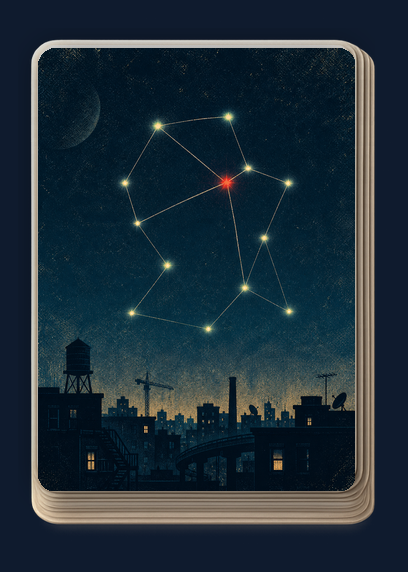
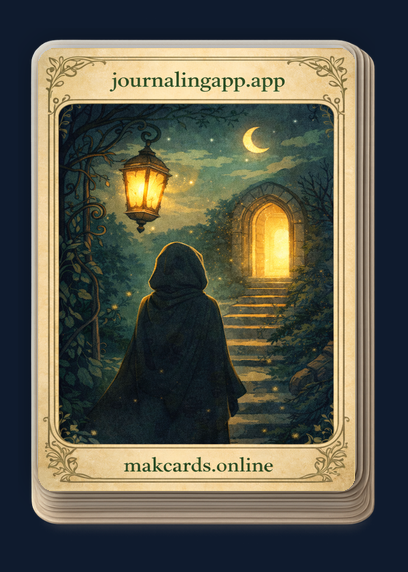
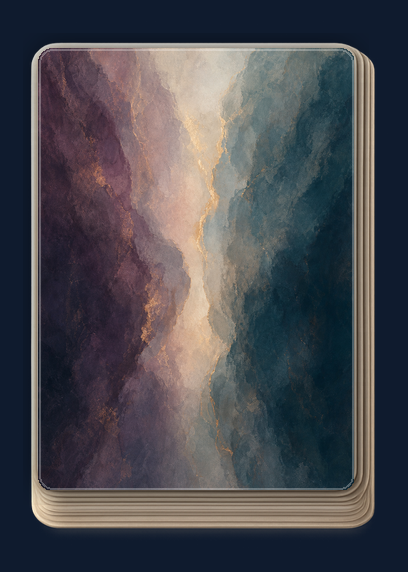
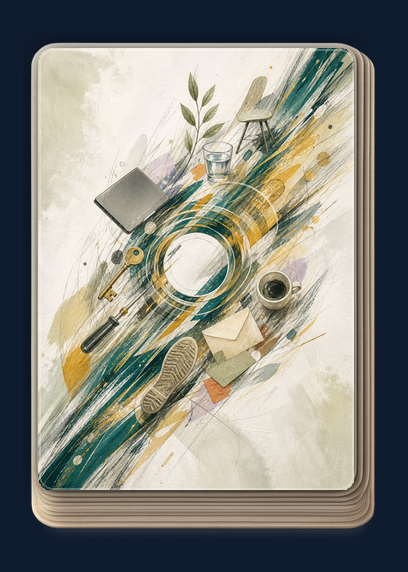
About metaphorical associative cards (MAC)
Metaphorical associative cards (MAC) are a projective tool used in self-reflection, coaching and therapy. Unlike tarot or oracle cards, they don't predict anything – the image becomes a mirror for what is already happening inside you, helping you put words on something that was unclear or hard to say directly.
You can work with MAC cards alone, with a therapist, or in a group. The card itself is not the answer; it is a frame for asking yourself a more honest question. The same image can mean very different things to two different people on the same day, and that is exactly what makes the tool work.